
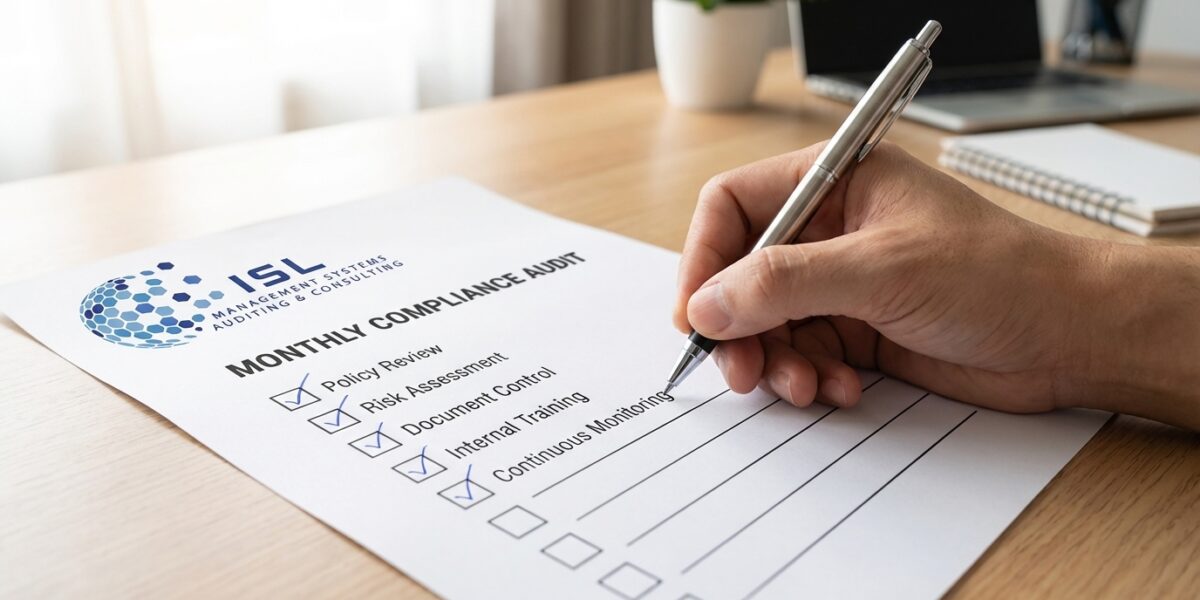
The certificate is on the wall. The audit is done. The team deserves the credit.
And then Monday arrives.
What happens in the weeks and months after certification determines whether ISO genuinely transforms how your organisation operates — or quietly becomes a box-ticking exercise nobody really owns.
Maintaining ISO certification isn’t about doing more work. It’s about making the right habits consistent. Here’s how to turn your ISO system into something that runs every day — not just before every audit.
Why Sustaining ISO Is Harder Than Achieving It
The push towards certification is usually well-resourced, focused, and time-bound. There’s a clear goal, a deadline, and often external support to get there.
Post-certification is different. There’s no deadline pulling the team forward. Without deliberate design, the system slowly fades — procedures drift, audits get postponed, and leadership attention moves elsewhere.
This is the most common trajectory for ISO systems across Africa. And it’s entirely avoidable.
We covered the specific causes of this in detail in our blog on why ISO systems fail after certification — worth a read if you’re approaching your first surveillance audit.
Build ISO Into Onboarding — Not Just Awareness
New staff pick up habits from the people around them. If those people aren’t consistently following documented procedures, new employees won’t either.
Make ISO part of how you bring people into the organisation:
– A practical, role-specific introduction to relevant procedures
– Clear explanation of what ISO means for their day-to-day work
– Where to find documentation they’ll actually use
This doesn’t require a lengthy training programme. It requires a deliberate, consistent habit. Organisations that do this well maintain functional systems through significant staff changes—because ISO knowledge is institutional, not personal.
Run Internal Audits as a Learning Tool
This is one of the most important mindset shifts in ISO continuous improvement — and one of the most overlooked.
When internal audits are framed as ‘finding problems before the external auditor does’, people hide issues. Auditors get surface-level answers. The audit tells you very little.
When they’re framed as ‘helping us understand how we’re actually operating’, people engage openly. Real improvement opportunities surface. The audit becomes genuinely useful.
Practical steps to make this work:
– Schedule audits well in advance across all areas — not just problem departments
– Rotate auditors so fresh eyes assess each area
– Report findings constructively — focused on root cause, not blame
– Close corrective actions before the next audit cycle, not just before the surveillance visit
ISL supports internal audit training and programme design across Africa. See our management systems consulting services for more.
Make Management Reviews Actually Useful
ISO requires management reviews at planned intervals. In practice, they’re one of the first things to slip after certification.
A well-run management review isn’t a compliance exercise. It’s a structured opportunity for leadership to look at real performance data and make informed decisions. Done properly, it’s one of the most valuable meetings your organisation has.
What a meaningful management review covers:
– Results from internal audits since the last review
– Customer feedback — trends, complaints, compliments
– Performance against quality objectives
– Status of corrective actions — what’s open, what’s closed
– Risks and opportunities on the horizon
– Resource requirements for the coming period
If your leadership is genuinely engaging with those topics at regular intervals, your ISO system is functioning. If reviews have stopped happening — that’s a red flag worth addressing now.
Align ISO Objectives With Business Objectives
ISO compliance management works best when ISO objectives aren’t separate from what your business is already trying to achieve.
Quality targets should reflect what genuinely matters commercially — customer satisfaction rates, delivery performance, error reduction, and complaint resolution time. When ISO targets are the same targets your business is already chasing, ISO stops feeling like an overhead and starts functioning as a useful management framework.
This integration of structured systems into everyday performance is something we explored in our earlier blog on how structured systems help businesses run better every day.
Build a Corrective-Action Culture — Not a Blame Culture
Nonconformances—things that didn’t go as the system requires—are normal. ISO’s corrective action process exists to deal with them: find the root cause, fix it, verify the fix, and prevent recurrence.
The problem is that in many organisations, nonconformances get hidden rather than surfaced. If reporting a problem leads to blame, people stop reporting. The management system stops receiving the information it needs to improve.
Leaders who respond with curiosity (‘what caused this?’) rather than blame (‘whose fault is this?’) build organisations where ISO compliance management actually functions.
Keep Documentation Aligned With Reality
Processes change. Equipment gets updated. Staff find better ways of doing things. If your ISO documentation doesn’t keep up, you’ll end up with a growing gap between what’s written and what’s happening.
Simple habits to prevent this:
- Assign ownership to individual procedures
2. Set annual review dates for all core documents.
3. Make document updates part of how operational changes are implemented — not an afterthought six months later
External Links Worth Reading
– ISO’s overview of continual improvement principles
– BSI’s guidance on sustaining ISO certification long-term
Frequently Asked Questions
How often should we review our ISO documentation?
Set a minimum annual review cycle for all core documents – with ad hoc updates whenever processes change significantly. The key is making it a scheduled activity, not a reactive one.
Who should own the ISO management system after certification?
A designated management representative with clear authority, enough time, and genuine leadership support. Without all three, maintenance quietly falls apart.
How do we keep staff engaged with ISO over the long term?
Connect ISO to work that matters to them. Use internal audits as positive learning experiences rather than inspections. Recognise improvements publicly. Keep leadership visibly committed.
Do we need to inform our certification body of operational changes?
Significant changes — particularly those affecting the scope of your certification — should be communicated. Smaller operational changes should be documented through your internal change control process and reflected in updated procedures.
Certification Was the Beginning — Here’s How to Keep the Momentum
The organisations that genuinely benefit from ISO — that see real improvements in quality, efficiency, and confidence — are the ones that treat certification as the start of something, not the end.
Maintaining ISO certification doesn’t require extraordinary effort. It requires consistent, well-designed habits built into how your organisation operates every day.
If you want support keeping your ISO system alive and delivering value, connect with ISL Global — we support organisations across Africa through the full ISO lifecycle, from implementation to long-term sustainability.
You can also explore our ISO certification preparation and management consulting services to see how we can support your specific needs.